Rubber Sheet: Choosing Thickness, Hardness and Compound
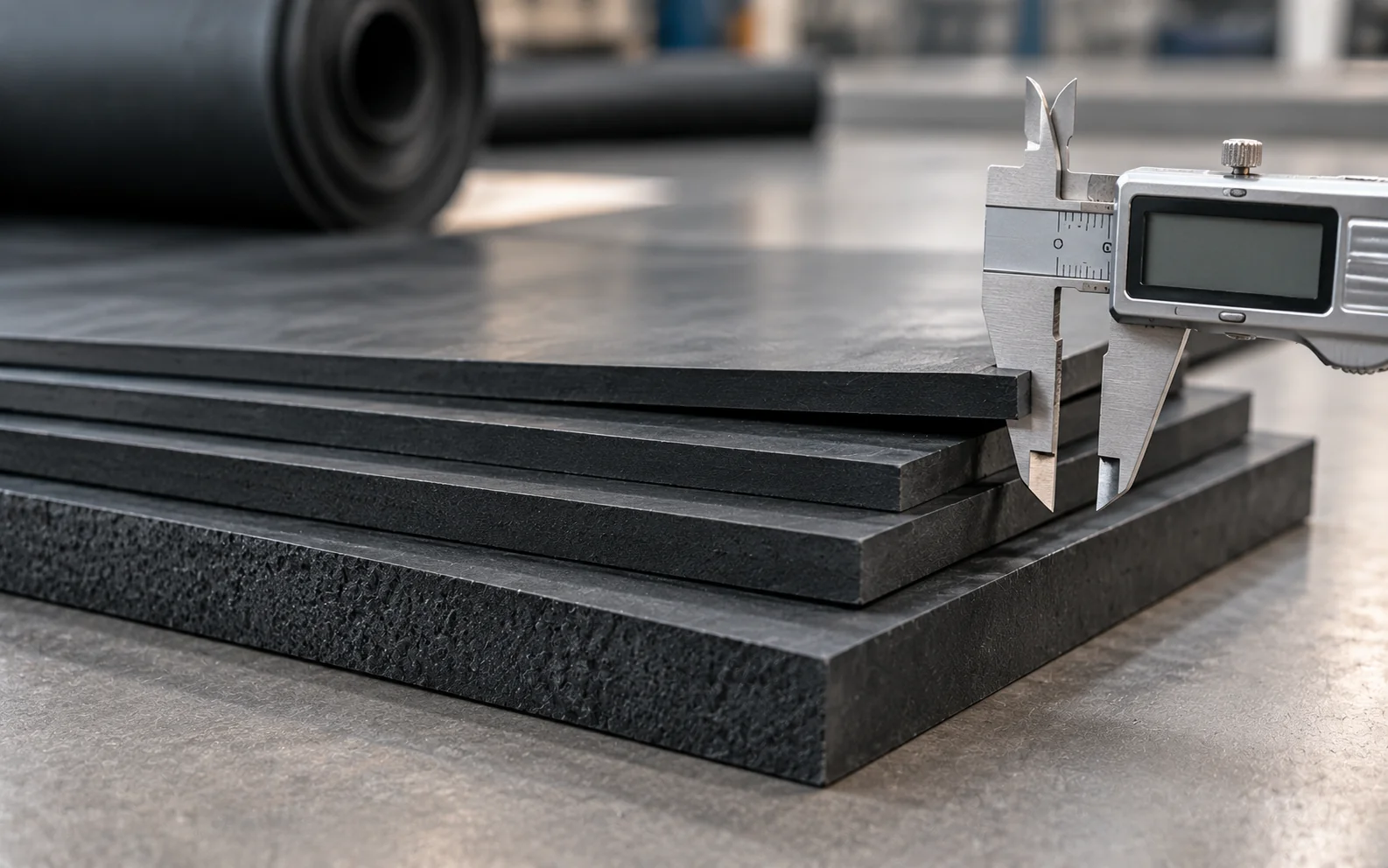
From gaskets to flooring and liners — how to settle on the right thickness and hardness.
The application sets the thickness
For flange gaskets 1–5 mm is usually enough; thicker material extrudes and loosens the joint. Workshop flooring is typically 3–10 mm, and tank or mining chute lining 10–50 mm.
What Shore A hardness tells you
40–50 Shore is soft and seals uneven surfaces well; 60–70 Shore is the standard for most gaskets; above 80 Shore suits load-bearing and wear parts. The rougher the mating surface, the softer the rubber should be.
Plain or reinforced sheet
If the sheet works under tension or high pressure — a diaphragm or a high-pressure flange gasket — reinforced sheet with one to four fabric or wire plies is the right choice. Plain sheet stretches under these conditions and loses its seal.
Ordering tip
When asking for a price, state material, hardness, thickness, roll width and quantity together. Common widths are 100, 120, 150 and 170 cm, and cutting to your width reduces offcut cost.