Industrial Hoses: Hydraulic, Pneumatic, Wire-Reinforced and Thermal
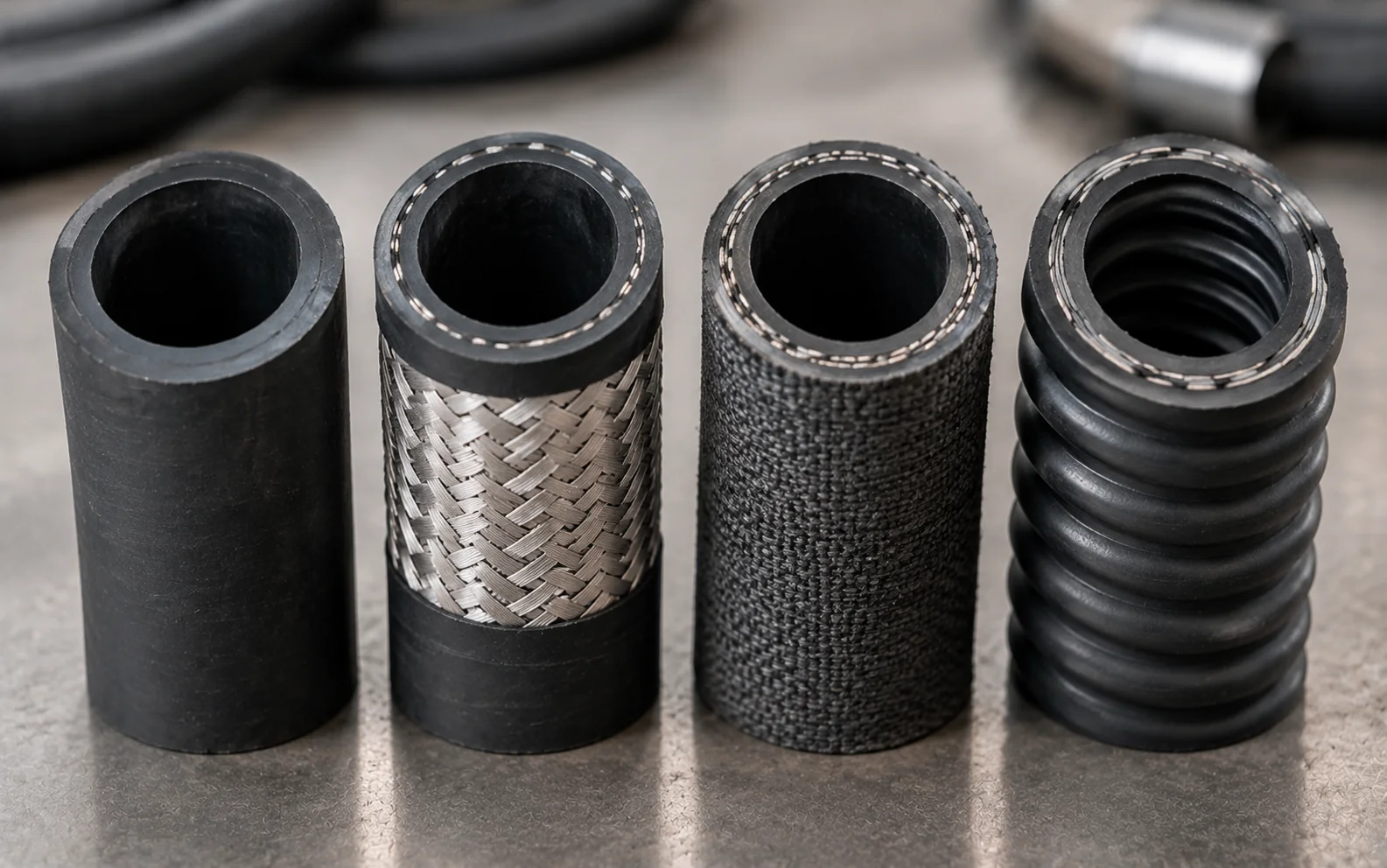
Each hose is built for a specific combination of pressure, temperature and fluid.
Working pressure, not burst pressure
Every hose has two figures: working pressure and burst pressure. Always select on working pressure; a 4:1 safety factor between the two is standard. Choosing on burst pressure is a common and expensive mistake.
Hydraulic versus pneumatic
Hydraulic hose is built with one to four steel wire plies for pressures of hundreds of bar; pneumatic hose is polyurethane or PVC, light and flexible, for low-pressure compressed air. The two are not interchangeable.
When you need a wire helix
Wherever a hose must suck or work under vacuum, a steel helix stops it collapsing. For simple low-pressure transfer, a textile-braided or unreinforced hose is enough and cheaper.
Temperature and fluid type
For hot air and steam, silicone or EPDM; for oil and fuel, an NBR inner liner; and for very high temperature and pressure, corrugated stainless hose with an outer braid.