Choosing the Right Rubber Compound for Industrial Parts
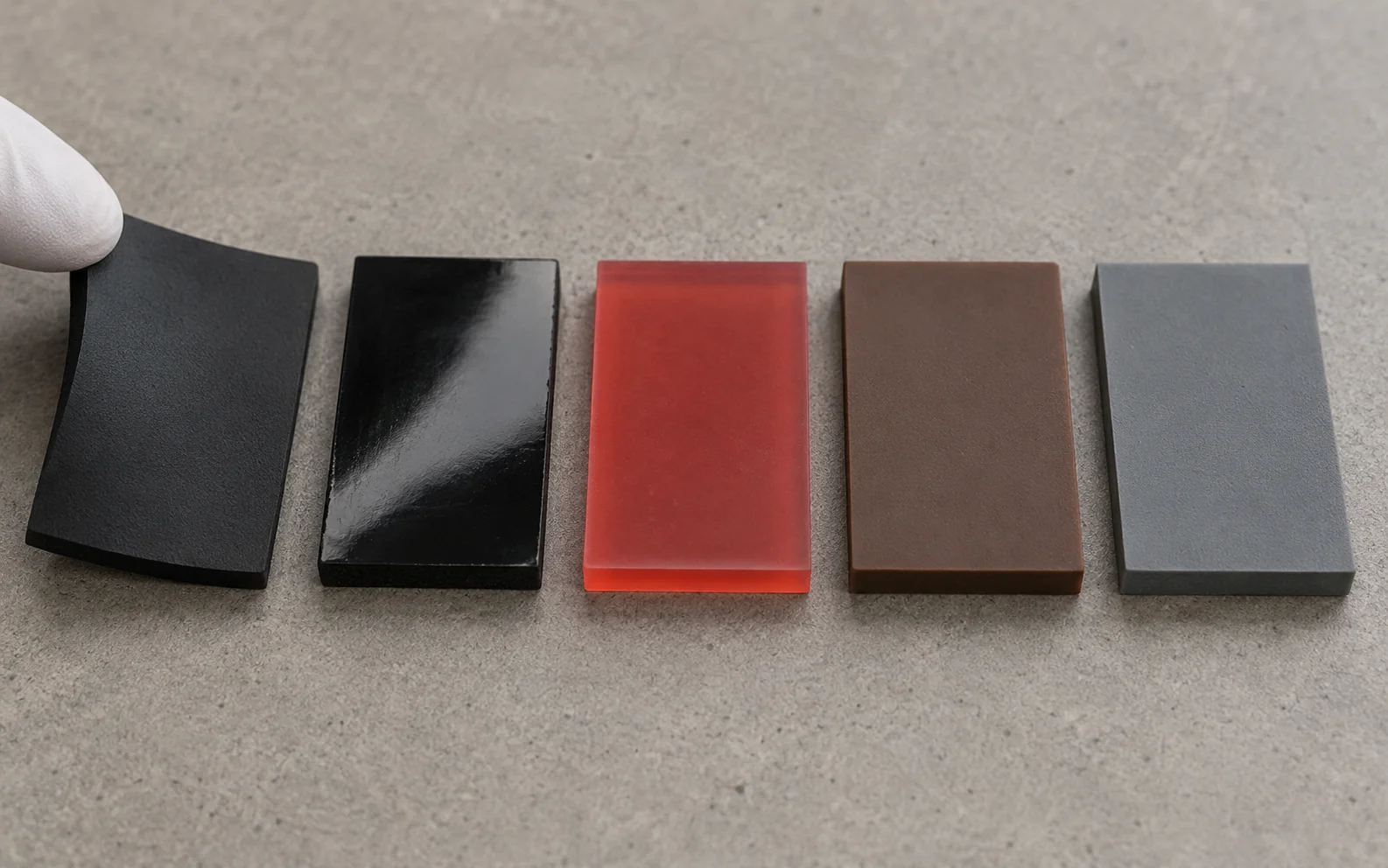
EPDM, NBR, SBR, silicone and Viton compared on oil, heat and ozone resistance.
Material choice matters more than price
Most premature failures in rubber parts come from picking the wrong compound, not from poor manufacturing. An NBR gasket in a hot steam line hardens and cracks within weeks, while the same part in EPDM lasts years. Before ordering, answer three questions: what fluid touches the part, what is the working temperature, and is the part exposed to sunlight and ozone.
The fluid in contact
Wherever oil, diesel, grease or petroleum products are involved, NBR is the default. For water, steam, detergents and brake fluid, EPDM performs better — and importantly, EPDM and oil are not compatible. For acids, strong solvents and aggressive chemicals, Viton (FKM) costs more but is the only safe option.
Working temperature
SBR stays stable to about 80 °C, NBR to about 100 °C, EPDM to about 120 °C, silicone to about 230 °C and Viton to about 250 °C. If a part sees both high heat and oil contact, Viton is the only compound that satisfies both.
Weathering, ozone and sunlight
Parts that work outdoors — door and window seals, roof coverings, mounts on outdoor equipment — should be EPDM. Natural rubber and SBR crack under ozone and have a short life in direct sunlight.
| Material | Oil resistance | Max temperature | Ozone & UV resistance | Typical use |
|---|---|---|---|---|
| NBR | Excellent | ~100 °C | Poor | Oil gaskets and O-rings |
| EPDM | Poor | ~120 °C | Excellent | Water, steam and outdoors |
| SBR | Poor | ~80 °C | Poor | Flooring and general use |
| Silicone | Moderate | ~230 °C | Excellent | Food and heat applications |
| Viton FKM | Excellent | ~250 °C | Excellent | Petrochemical and chemicals |