O-Rings: Size, Compound and Squeeze
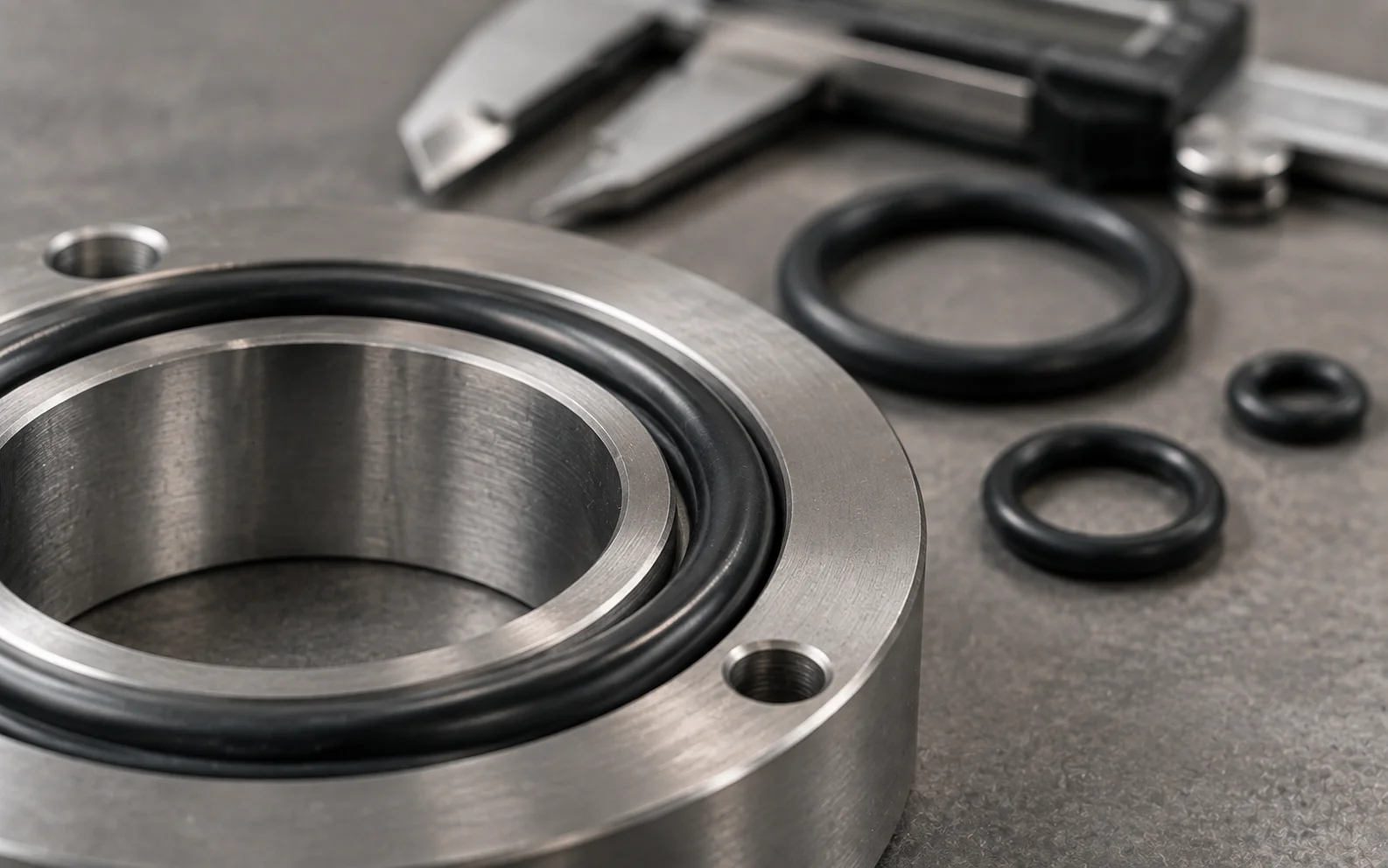
Why the right O-ring needs both the right size and the right squeeze.
An O-ring is defined by two numbers
Every O-ring is defined by its inner diameter (ID) and cross-section (CS). Quoting only the ID invites mistakes; measuring the cross-section with callipers on a free, unstretched ring is the most accurate method.
Squeeze is the secret of sealing
An O-ring seals when compressed 15–30 % of its cross-section. Less squeeze means leakage; more means short life and splitting. Groove depth and width must be designed to standard, not guessed.
Service conditions pick the compound
NBR for oil, EPDM for water and steam, silicone for food and high heat, Viton for aggressive chemicals. The usual hardness is 70 Shore A; at high pressure 90 Shore is used to prevent extrusion.
Read the failure signs
Hardening and cracking means excess heat or ozone; swelling and softening means chemical incompatibility; a spiral cut means the ring twisted during fitting. Each sign points to a different fix.